Work coordination platform
Designed for the automotive industry
As a leader in innovation, you understand the importance of staying ahead of the curve in the fast-moving automotive 4.0 world. KanBo provides you with the tools to do just that by facilitating smart factory operations, streamlining project management, fostering collaboration and solving complex problems.
How KanBo Boosts Productivity and Coordination for Infotainment Validation Engineers
As large enterprises continue to expand and thrive, coordination and collaboration become increasingly critical for success. KanBo is a work coordination platform that helps facilitate efficient communication and collaboration across all departments and teams within a large enterprise, and also with external stakeholders. This innovative platform has been designed for organizations in the automotive industry, with a special focus on Infotainment Validation.
One of the most significant advantages of KanBo is its adaptability. The platform offers both on-premises and cloud installations that can be customized to meet the unique needs of every business. This flexibility ensures that teams can collaborate efficiently and reliably, regardless of their location or the devices they use. Moreover, KanBo’s intuitive interface enables users to manage tasks and projects with ease, making it a valuable addition for any organization.
From an Infotainment Validation Engineer’s perspective, KanBo excels in facilitating communication between teams and departments. The platform acts as a communication hub, ensuring that development engineering teams and the validation team can work seamlessly together. This smooth coordination is critical in ensuring the quality and timely delivery of each validation event.
KanBo also offers several exciting features that enhance productivity and efficiency. The platform allows users to create and manage tasks, track progress, and collaborate with colleagues in real-time. Its seamless integration with other software platforms, such as Microsoft Teams and SharePoint, further boosts its usability and flexibility.
For those unfamiliar with KanBo, it is easy to become overwhelmed by its many features and capabilities. However, a short product tour reveals its user-friendly and intuitive interface, which puts users in full control of every aspect of their work. The platform’s ability to support both on-premises and cloud installations makes it a flexible and practical choice for large enterprises.
In conclusion, KanBo is a work coordination platform that meets the needs of every type of business. It enables smooth and efficient coordination and communication across departments and teams, which is essential for the success of large enterprises. For Infotainment Validation Engineers that work within the automotive industry, KanBo is a powerful tool that can enhance productivity and efficiency, promoting overall success for businesses.
As an Infotainment Validation Engineer in the Automotive Industry, you are constantly striving to improve the user experience and ensure the safety of drivers and passengers. With KanBo, you can streamline your work processes and collaborate with your team to achieve these goals. Here’s a glimpse into one week of your life as an Infotainment Validation Engineer in the Automotive Industry, using KanBo to manage tasks and projects.
Monday:
Start your week off by creating a new project board in KanBo for the latest infotainment system you are working on. Invite your team members to join the board and assign them tasks for the week. Use KanBo’s Kanban view to visualize the progress of each task and monitor the status of the overall project.
Tuesday:
Use KanBo’s Table view to track defects and bugs using a spreadsheet-style view. Add new items as they are discovered, assign them to team members, and set their priority levels.
Wednesday:
Collaborate with your team members by commenting on cards and using @mentions to tag specific people and keep everyone in the loop. You can also use KanBo’s follow feature to receive notifications on specific cards or boards to stay updated on their progress.
Thursday:
Hold a virtual team meeting using KanBo’s activity view. This view provides a timeline of all the actions taken on cards and boards, making it easy to review progress and identify any bottlenecks in the workflow.
Friday:
Generate reports on progress made during the week using KanBo’s dashboard feature. Customize the dashboard to display the most relevant information, including project progress, team performance, and quality metrics.
With KanBo, you can manage all of your projects and tasks in one place, collaborate with your team members, and track progress to ensure that your infotainment systems are the best they can possibly be.
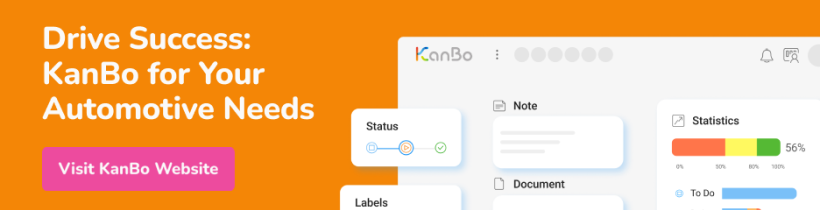
KanBo is much more than just a communication tool. It is a full-fledged work management platform that goes beyond traditional communication and collaboration features to offer a comprehensive solution for managing your work. Although communication and collaboration between team members play a significant role in KanBo, the platform offers many other features that help streamline work processes and increase productivity in large enterprises.
One of the core strengths of KanBo is its ability to unify all teams, departments, and external stakeholders on a single platform, providing a centralized hub for all work-related activities. It allows for a seamless flow of information, knowledge, and resources across the organization, enabling teams to work together more effectively towards common objectives.
KanBo’s workspaces and spaces allow for efficient organization and management of work-related projects, tasks, and workflows. Teams gain full visibility into project progress, deadlines, and milestones through KanBo’s various views, including Kanban, List, Table (Spreadsheet), Calendar, Gantt chart, and Timeline. KanBo’s powerful workflow engine enables teams to automate processes, set up rules for notifications and approvals, and easily track progress.
Other valuable features of KanBo include document management, resource management, card relations, and card templates. With KanBo, teams can easily manage their documents and files, including version control and reference links to other cards and documents. Resource management enables teams to manage their resources and workload, while card relations help teams manage complex projects with ease. Card templates provide a quick and easy way to create and replicate boards, cards, and workflows across various projects and teams.
In summary, while KanBo offers excellent communication and collaboration features, it is much more than just a communication tool. It is a powerful work coordination platform that streamlines work processes, increases productivity, and provides a unified workspace for all teams, departments, and external stakeholders in large enterprises.
Q&A
1. QA: Who is KanBo designed for?
A: KanBo is designed for large enterprises with a special focus on Infotainment Validation in the automotive industry. It is a work coordination platform that helps facilitate efficient communication and collaboration across all departments and teams within an organization.
2. QA: What sets KanBo apart from other work coordination platforms?
A: KanBo offers both on-premises and cloud installations that can be customized to meet the unique needs of every business. Its adaptability ensures that teams can collaborate efficiently and reliably, regardless of their location or the devices they use. Moreover, KanBo’s intuitive interface enables users to manage tasks and projects with ease, making it a valuable addition for any organization.
3. QA: How can Infotainment Validation Engineers benefit from using KanBo?
A: Infotainment Validation Engineers can benefit from using KanBo as the platform facilitates smooth communication between teams and departments. It acts as a communication hub, ensuring that development engineering teams and the validation team can work seamlessly together. In addition, KanBo offers several productivity-enhancing features such as task management, progress tracking, collaboration in real-time, and integration with other software platforms like Microsoft Teams and SharePoint.
Use Case: Streamlining External Communication with KanBo Card Comments as Email Messages
As large enterprises collaborate with various external stakeholders, external communication becomes increasingly critical for success. KanBo’s feature of Card Comments as Email Messages makes external communication easy and efficient. This feature allows users to write a comment in a card and mark it for sending it to an email recipient. This feature helps in streamlining external communication, by ensuring that all parties involved in a project can stay up to date with the latest developments.
For instance, suppose an automotive company is working on an infotainment project with a supplier. The project requires the supplier to provide critical infotainment components. As the project progresses, there may be updates or changes in requirements. Sending these updates and changes to the supplier via email may not be the most efficient way, as it may lead to confusion or delays.
With KanBo’s Card Comments as Email Messages feature, users can add comments to a card, select to send the comment as an email message, and mark it to a specific email recipient. This feature ensures that the supplier receives the latest updates and changes on a project in real-time. Additionally, the public email address associated with the card makes it easy for the supplier to reply to the card directly.
The process of sending card comments as email messages is simple and straightforward, and users can easily use KanBo with their existing Microsoft Office skills. To use this feature, users need to enable it as an additional component and follow a few easy steps outlined below:
1. Enter the card and write a comment.
2. Select “Send as Email” from the drop-down menu.
3. Create an incoming email address. This will enable external users to reply to the card directly.
4. Select one or more email addresses to which the message will be sent.
5. Press the send button to send the message.
Once the message is sent, the comment will be visible on the card as well as the board’s activity stream with information on who the message was sent to. The recipient(s) will receive an email from the public card email address. If the Incoming Emails feature is enabled, the recipient can reply to the email, and their reply will be added to the card within a couple of minutes.
In conclusion, KanBo’s Card Comments as Email Messages feature ensures efficient external communication, enabling users to stay up to date with the latest developments in a project. With this feature, users can easily send comments to external stakeholders without wasting time on drafting emails. Overall, KanBo’s adaptability and user-friendly interface make it a valuable tool for large enterprises that require efficient communication and collaboration.